
Pairing a Small Sauna With a Cold Plunge for Contrast Therapy
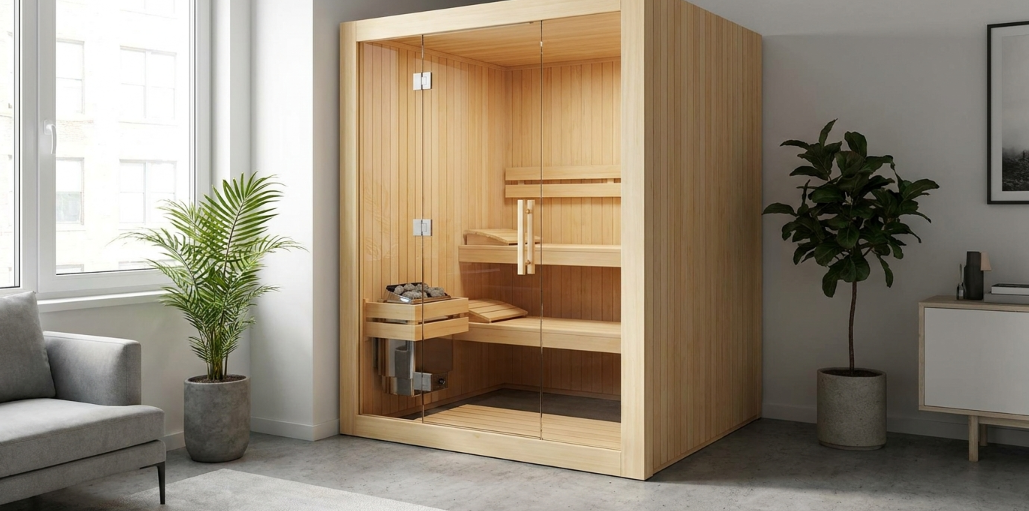
Contrast therapy alternates heat and cold in the same session: typically 10 to 15 minutes in a sauna at 170 to 190 degrees Fahrenheit, followed by 1 to 3 minutes in cold water around 50 to 59 degrees, repeated for two or three rounds. A small two-person sauna paired with a compact chest-freezer or barrel-style plunge fits into a garage bay or covered patio in under 40 square feet combined, and most home setups run $4,000 to $9,000 total once both units and basic electrical work are included. The research behind each half is real but narrower than most marketing suggests, and the two practices don’t always agree on the best approach to muscle recovery.
How do you structure a sauna and cold plunge session at home?
Start with the sauna, not the cold water. Sit for 10 to 15 minutes at a temperature between 170 and 190 degrees Fahrenheit, long enough to raise core temperature and get a real sweat going without overdoing a first session. Move directly into the plunge for 1 to 3 minutes, focusing on steady breathing rather than fighting the initial shock, then return to the sauna for a second round. Two to three full rounds is a typical session length for someone comfortable with both extremes; beginners often do better starting with one round and a shorter cold exposure, closer to 45 seconds, before working up. Ending on cold tends to leave people more alert, while ending on heat is the better choice for a session meant to wind down before bed.
How hot and how cold should each round actually be?
On the heat side, 170 to 190 degrees Fahrenheit is the standard range for a traditional electric sauna, reached in 25 to 35 minutes in a well-sized two-person cabin. On the cold side, most home plunges run between 50 and 59 degrees Fahrenheit, which is achievable with a small chiller unit or, in colder climates, ice added to a stock tank. Colder water is not automatically better and raises the risk of an unpleasant or unsafe reaction during longer exposures; a controlled 50 to 59 degree range for one to three minutes produces a strong physiological response without pushing into the kind of extreme cold that requires closer supervision.
What does the sauna side of contrast therapy actually support, evidence wise?
Sauna research has the deeper evidence base of the two practices. A large Finnish cohort study found that men who used a sauna four to seven times a week had lower rates of fatal cardiovascular events and all-cause mortality compared with men who used one only once a week, an association that held after adjusting for other risk factors. A follow-up cohort study reported similar joint associations between sauna use and cardiorespiratory fitness on long-term cardiovascular outcomes. A separate study measuring blood-based cardiovascular markers after short-term Finnish sauna bathing found favorable shifts in non-naive sauna users. These are cohort associations, not controlled proof that sauna use prevents disease in any one person, and the populations studied were largely Finnish adults with a lifelong sauna habit, which matters when applying the findings to a new home routine.
Where does the cold plunge evidence stand, and is it settled?
It is genuinely mixed. A 2025 systematic review and meta-analysis on cold-water immersion found some support for benefits to wellbeing and recovery-related outcomes, and older Cochrane-reviewed evidence has shown cold-water immersion can reduce short-term muscle soreness after exercise. At the same time, some trials suggest cold exposure applied immediately after resistance training may blunt the strength and hypertrophy adaptations that training is meant to produce, which is a real tradeoff for anyone doing a plunge right after a lifting session rather than after cardio or on a rest day. Anyone building a home routine, including a small sauna paired with a two-person setup from a retailer like SweatDecks, should factor training goals into when the cold half happens, not just whether to include it.
How many sessions a week is reasonable, and who should be cautious?
Two to four contrast sessions a week is a common range for people easing into the practice, and many healthy adults comfortably do more once acclimated. The bigger question is medical, not scheduling: anyone with unstable angina, a recent heart attack, uncontrolled high blood pressure, or who is pregnant should get individual guidance before combining sauna heat with cold-water shock, since both practices place real, if usually brief, demand on the cardiovascular system. Most healthy adults do better starting with shorter cold exposures and fewer rounds, then building up over a few weeks.
What layout and equipment does a home contrast setup actually need?
Beyond the two main units, a few small details make the routine easier to keep up. A slip-resistant mat between the sauna door and the plunge matters more than it sounds, since bare feet moving quickly between a hot cabin and cold water on a wet surface is a common source of minor slips. A simple wall-mounted timer or a phone timer propped where it’s visible from the bench keeps rounds consistent without guessing. A thick towel or robe kept nearby for the transition helps with the temperature swing, and a small step stool at the plunge makes entry and exit easier for anyone who finds climbing over a tall tank awkward after a hot round. None of this adds meaningfully to the budget, but skipping it is a common reason people find the routine annoying enough to drop within the first few weeks rather than sticking with it long enough to notice a difference.
How does indoor placement compare with an outdoor setup for this pairing?
An indoor garage bay or finished basement keeps both units within a few steps of each other and out of the weather, which matters more for a contrast routine than for a sauna used alone, since the whole point is moving quickly between hot and cold without a long walk in between. The tradeoff is ventilation and moisture: a small plunge produces humidity and occasional splashing that an indoor space needs to handle, usually with a floor drain or a water-resistant mat under both units. An outdoor covered patio setup avoids the moisture concern entirely and is often the simpler retrofit, though it does mean layering up in cold weather for the walk between the two, which some people find part of the appeal and others find a reason to skip a session on a January morning.
Frequently Asked Questions
How do you structure a sauna and cold plunge contrast session? Alternate 10 to 15 minutes in a sauna heated to 170 to 190 degrees Fahrenheit with 1 to 3 minutes in cold water around 50 to 59 degrees, repeated for two to three rounds.
How cold does the plunge need to be for contrast therapy? Most home setups run between 50 and 59 degrees Fahrenheit; colder is not automatically better for a one to three minute exposure.
Does contrast therapy actually help recovery, based on research? The evidence is mixed. Sauna use is associated with cardiovascular benefits in cohort studies, while cold exposure right after resistance training may blunt strength and muscle growth adaptations in some trials.
How many contrast sessions per week is reasonable? Two to four sessions a week is a common starting range, though anyone with a cardiovascular condition should get individual guidance first.
References
- Association between sauna bathing and fatal cardiovascular and all-cause mortality events, JAMA Internal Medicine, 2015
- Joint associations of sauna bathing and cardiorespiratory fitness on cardiovascular and all-cause mortality risk: a long-term prospective cohort study, Annals of Medicine, 2018
- Short-term effects of Finnish sauna bathing on blood-based markers of cardiovascular function in non-naive sauna users, Heart and Vessels, 2018
- Effects of cold-water immersion on health and wellbeing: A systematic review and meta-analysis, PLoS One, 2025
- Cold-water immersion (cryotherapy) for preventing and treating muscle soreness after exercise, Cochrane Database of Systematic Reviews, 2012
By Ashley Whitfield